Pruning Pomegranates Twice a Year for Abundant Growth
Pomegranates are resilient plants that thrive as either trees or bushes. They don't need extensive pruning; just a few essential steps each year will keep them producing vibrant fruits.
These plants vary in size, from towering trees that can grow up to 20 feet tall to dwarf varieties perfect for small gardens. Pomegranates can be cultivated for their beautiful bark and leaves or cherished for their delightful fruits.
Regardless of how you're growing your pomegranates, there are many advantages to pruning them twice a year. This straightforward task will reward you with a bounty of delicious, pink fruits.
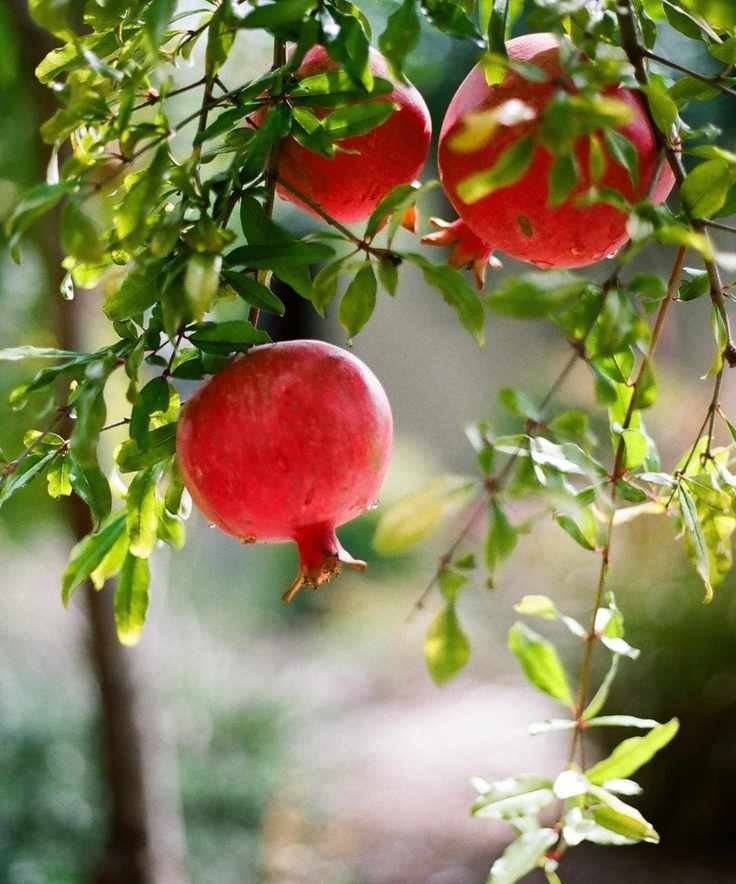
Pomegranates thrive in temperatures down to 60°F
Essential Tools for Pruning Pomegranates
You'll only need a few basic gardening tools for pruning pomegranates: pruning shears, loppers, and a pruning saw for larger branches.
Ensure all tools are clean and sharp to streamline the pruning process, minimize damage, and prevent the spread of disease.
Since pomegranates have thorns, always wear protective goggles, long sleeves, and sturdy gardening gloves while pruning.
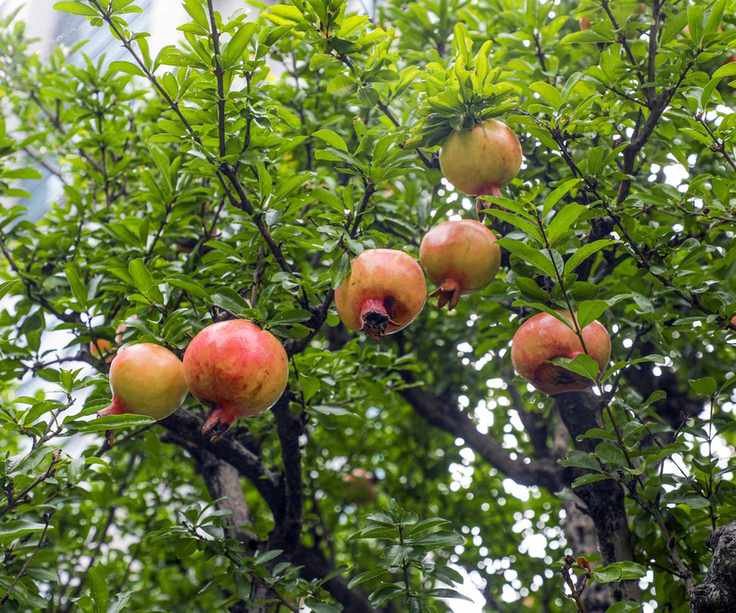
Pomegranates flourish in sunny, sheltered areas
Pruning a Pomegranate Tree
Once established, usually after three years, pomegranate trees need minimal pruning. Initial years should focus on shaping the tree. You can choose between a single-stemmed or multi-stemmed approach.
For a single-stemmed tree, retain one strong shoot in the first year and remove others. For a multi-stemmed tree, select a few strong shoots to grow. In the second and third years, trim all side branches by a third to promote bushiness and clear the lower third of the main trunk.
After establishment, pruning is straightforward. Vicky Popat, co-founder of PlantOGram, suggests three main steps for late winter or early spring pruning. Think of it as giving your tree a stylish haircut.
- Remove dead and damaged wood - Clear away unhealthy branches to rejuvenate your tree.
- Thin out crowded areas - Enhance light penetration by trimming overgrown branches.
- Maintain balance - Shorten long branches to keep the shape neat and encourage healthy growth.
Besides winter pruning, pomegranates frequently develop suckers during summer, which should be removed. These suckers and upright water sprouts consume energy and should be pruned at least once annually.

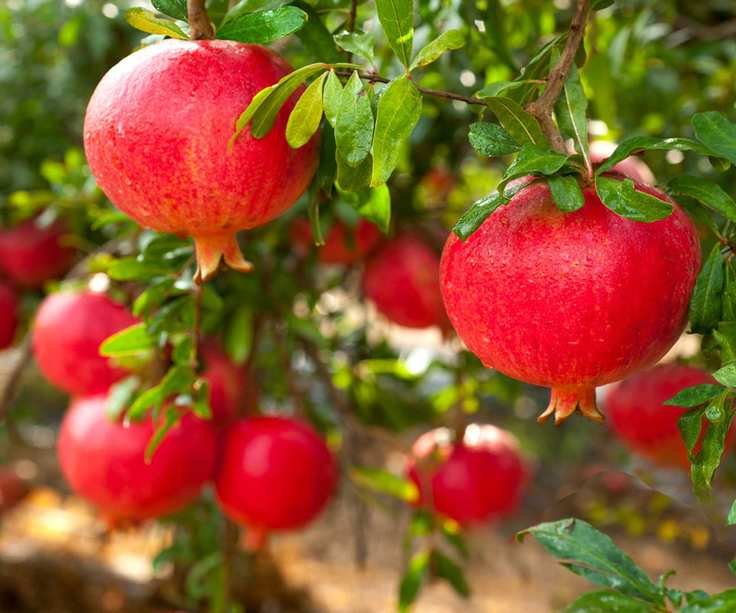
Pomegranates turn fully red when ripe
Pruning a Pomegranate Bush for Fruit
Pruning a pomegranate bush is similar to that of a tree, focusing on removing dead, diseased, and unproductive branches. If your aim is a fruitful harvest, prioritize maintaining the most productive branches.
Pomegranates bear fruit best on 2-3 year-old wood, and production declines as branches age.
Aaditya Bhatta, founder of Plants Craze, emphasizes the need to balance new and old growth for optimal productivity, suggesting that older, unproductive branches be removed to allow new growth to flourish.
Cutting back younger wood can stimulate new shoots and fruiting spurs for the next season. Make cuts at a 45-degree angle just above an outward-facing bud to encourage outward growth.
Aaditya also notes that an open canopy is essential for healthy fruit development and reducing fungal diseases. Remove any inward-growing branches and those that droop towards the ground to prevent fruit rot.
After pruning, consider mulching around the bush to suppress weeds and retain moisture, or applying a balanced fertilizer to support recovery and robust growth as the plant emerges from dormancy. An example of a suitable fertilizer is the Pennington Ultra Green All Purpose Plant Food 10-10-10 available at Walmart.
Can You Over-Prune a Pomegranate Tree?
Annual pruning should be minimal, following the one-third rule to avoid removing more than a third of the branches. Heavy pruning can hinder recovery and lead to weak growth.
Excessive pruning may also impact fruiting levels, as it removes vital fruit-bearing wood. Overcutting is a common misstep that can diminish fruit yield and weaken the tree overall.
Pomegranates can also thrive in pots, making them ideal for small gardens. Growing them in containers simplifies pruning and restricts their growth.