Effective Ways to Eliminate Weeds Without Harming Your Plants
Q: I have two large flower beds in my backyard filled with perennial shrubs and flowering plants. With warmer weather, I've noticed a surge in weeds. They not only look unappealing, but I worry they might consume vital nutrients and overshadow my plants. What's the best way to eliminate them without harming my flowers and shrubs?
A: When removing weeds from flower beds, prompt action is crucial, but you must be careful. Hand-pulling is often the safest approach; use a small hand trowel to gently extract weeds by their roots. The Berry & Bird multifunctional tool from Amazon is ideal for this task. Be cautious not to disturb the roots of adjacent plants. This technique is also effective for tackling weeds in lawns without harming the grass.
However, some weeds pose a bigger challenge. For example, quackgrass sends out a network of rhizomes deep in the soil; leaving even a fragment can lead to regrowth. For these stubborn types, consider additional strategies.

A former professional gardener, Holly enjoys sharing her insights on plants and outdoor living while nurturing her extensive houseplant collection.
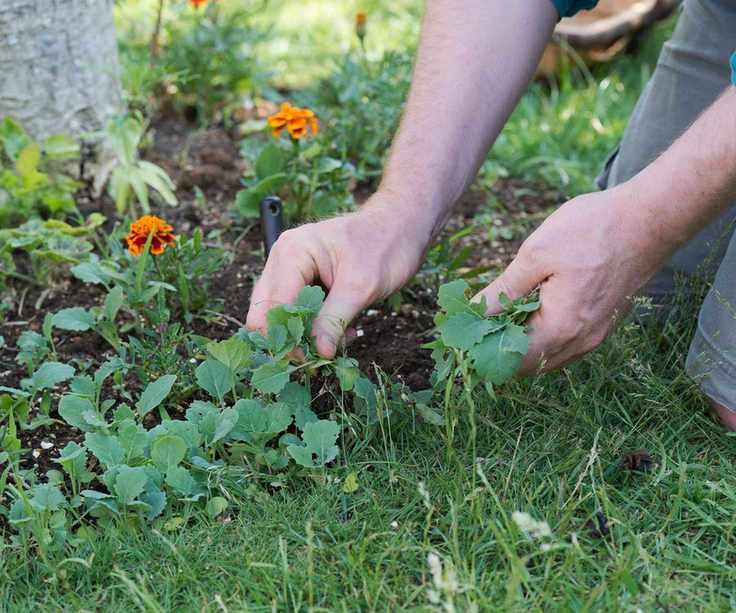
Hand-pulling weeds is a great way to manage them
Applying Mulch to Control Weeds
Using compost, shredded bark, leaf mold, or other mulch types can effectively suppress weeds. Apply a thick layer in spring to prevent weeds from establishing. Organic mulches also enrich the soil as they decompose. Avoid placing mulch against plant stems to prevent rot.
For existing weeds, remove as many as possible by hand before adding mulch. Dig out easier weeds by the roots and cut down tougher ones with a small hoe. Monitor the area and continue this process; over time, the roots should exhaust themselves, leading to weed death.

Spring mulching can prevent weed growth
Utilizing Herbicides in Flower Beds
Established perennial weeds, like thistles, docks, dandelions, and bindweed, might require herbicide application, according to garden expert John Negus.
'Opt for weedkillers containing glyphosate as the active ingredient,' he advises. These penetrate to the roots, eliminating the entire plant. However, they are non-selective and can harm desired plants, so exercise caution.
Check weather conditions before spraying. Rain and wind can cause drift, potentially harming your plants. If needed, wrap your plants in plastic before application, which may take a week or two to show results. Reapply if new leaves emerge.
For better control, consider using a gel formula, such as Roundup Precision Gel, available on Amazon. This product can be dabbed onto leaves directly, minimizing the risk of drift and allowing you to target specific plants.
Alternatively, you can temporarily relocate desired plants to a separate area, ensuring no weeds are attached to their roots. This is more labor-intensive and may cause some plants to experience transplant shock.

With over 50 years as a gardening journalist, John shares his expertise on various gardening topics and has authored several books.
Incorporating Ground Cover Plants
To further reduce weed proliferation, consider filling gaps with ground-cover plants. These plants will form a dense layer that blocks sunlight and moisture from reaching weed seeds, hindering their germination.
John suggests options like Cotoneaster 'Coral Beauty' (an evergreen with white summer flowers and vibrant orange berries), Cotoneaster dammeri (an evergreen ground-cover with striking red berries), and Lonicera pileata (a fast-spreading plant with lush green leaves), provided they aren't classified as invasive species in your area.
Weeds are bound to appear in flower beds, but don't lose hope. Quick removal and continuous vigilance will help maintain the beauty of your borders.