Designing a Parterre Garden: Essential Considerations
Parterre gardens enhance various backyard sizes, from cozy courtyards to vast country landscapes.
Despite their rich history, these gardens fit beautifully in modern settings.
The standout feature of a parterre garden is its intricate design, offering many variations that can harmonize with other backyard concepts. While commonly associated with formal garden styles, they can suit various garden aesthetics.
Understanding Parterre Gardens
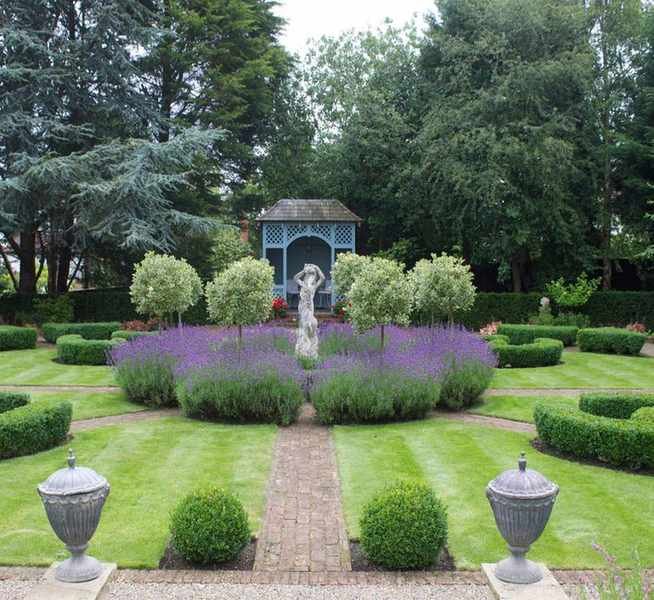
When planning your garden, consider incorporating parterre elements, which can fit even in smaller spaces. These gardens are characterized by symmetrical beds, traditionally bordered by low, clipped evergreen hedges.
Parterre styles range from historic designs inspired by embroidery to modern geometric layouts, featuring gravel pathways and vibrant blooms. Don't feel pressured to stick solely to historical themes, says a garden designer, suggesting the inclusion of unexpected elements.

Designing Your Parterre Layout
According to a garden designer, the complexity of your parterre layout will be influenced by the available space, your design preferences, your home's architecture, and how much maintenance time you're willing to invest.
Although parterre gardens may seem suited for grand, traditional homes, they can also complement small garden concepts in urban settings.
The appeal of parterre gardens lies in their repetition, a timeless feature cherished across the globe. As garden styles evolve, you can incorporate abstract or geometric shapes for a contemporary twist.

Finding Design Inspiration for Parterre Gardens
Look for inspiration in your surroundings when crafting your parterre garden. It's often best situated near the house, allowing for a cohesive relationship between the two.
Inspiration may also arise from unexpected sources, like a wrought iron gate or a bench detail. A designer shares how an Italianate gate influenced their parterre's design. Regardless of the chosen pattern, ensure that symmetry, order, and flow guide your design choices.

Planting in a Parterre Garden
Traditionally, parterre gardens featured intricate hedging patterns complemented by gravel or grass, often with tulips scattered throughout.
Today, consider introducing herbaceous plants within garden borders for year-round interest. Options include hellebores, roses, geraniums, asters, and seasonal bulbs. Designer recommendations feature Lilium regale and Nerine bowdenii 'alba' for extended blooms into winter.
Fill beds with ornamental flowers that change throughout the year. Inspired by Victorian practices, think about vibrant bedding plants like heliotropes, petunias, and salvias, or opt for low-maintenance, pollinator-friendly perennials as wildlife-friendly choices.
Designer suggestions include silver-foliaged lavender for summer and a variety of spring and summer bulbs, such as purple tulips and alliums.

Planting Techniques for Parterre Gardens
While the term parterre means 'on the ground', it's essential to incorporate vertical elements in your design.
A designer points out that neglecting vertical elements can detract from the overall impact. Layers of height enhance the visual appeal of the garden.
Traditionally, box hedging, Buxus sempervirens, defined parterre beds, but box blight has led to alternative options. Consider using Ilex crenata, Taxus baccata, or Lonicera nitida for their hardiness and fast growth.
Adding topiary shapes can elevate the design, with varieties like euonymus 'Jean Hughes' ideal for low hedging.
Modernizing Your Parterre Garden
For a contemporary touch, consider unconventional choices for border plants. A designer suggests Pittosporum tenuifolium 'Tom thumb', which features deep purple foliage contrasted with fresh green growth.
Incorporating flowering hedges, such as Lavandula angustifolia 'Munstead' or 'Hidcote', adds visual interest and delightful fragrance, perfect for entrances. Lavender is easy to cultivate and brings texture and scent.
For layout, simple grids of squares or circles work well for modern homes.

Positioning Your Parterre Garden
Place your parterre on level ground, ideally near the house for optimal viewing, as they are designed to be appreciated from above. For garden patio concepts, symmetrical beds are visually appealing flanking terrace areas.
Parterres can also creatively conceal ground-level elements that may not be aesthetically pleasing. They provide structure near the house while disguising features like drains.

Maintenance of Parterre Gardens
While parterres are often perceived as high-maintenance, they can be designed for simplicity. Opt for limited planting or avoid planting within borders for a low-maintenance approach.
A designer appreciates the architectural simplicity of minimal planting and emphasizes pathways for easy access. Gravel paths can cover weed suppression materials, making upkeep simpler.
Hedging requires trimming a few times annually, but with a streamlined layout, a beautifully structured parterre can be achieved without extensive maintenance.
Distinguishing Knot Gardens from Parterres
Identifying the difference between knot gardens and parterres can be tricky due to their design similarities.
Knot gardens originated in the Middle Ages, featuring ornate patterns of herbs and medicinal plants, earning them the name 'embroidery for the earth.'
Parterres evolved from knot gardens, showcasing symmetrical beds bordered by clipped hedges in decorative designs, often surrounded by gravel.