Explore the Wonders of Easter Island: A Visual Journey
Today couldn't be better—clear skies, music playing, and the open road ahead.
The scenery is breathtaking—steep cliffs adorned with moai statues rise above the Pacific Ocean. I slow down for wild horses crossing the road. This remote island is one of the most extraordinary places on Earth, situated 2,290 miles from mainland Chile and 1,150 miles from the nearest inhabited island. Spanning just 14 miles, it features an extinct volcano at each end.
Easter Island, or Rapa Nui as the locals call it, has a stormy history. Polynesians first settled here between the 4th and 8th centuries, constructing the iconic moai statues on stone platforms known as ahu. Conflicts over land led to tribal wars, and many statues were destroyed. Resource depletion from unsustainable agricultural practices resulted in significant deforestation, which remains evident today. The Dutch arrived on Easter Sunday in 1722, naming it Easter Island, or Isla de Pascua in Spanish.
The island's airport is the most secluded globally, established by the U.S. Air Force in 1966 to promote tourism. NASA later expanded the runway for space shuttle emergencies, allowing larger aircraft to land.
Rising sea levels, erosion, and climate change pose a significant risk to this tiny island, making it essential to visit now. Check out this photo guide highlighting top sites, photography tips, logistics, and budgeting advice! Discover my favorite experiences on Easter Island as well as photography pointers.
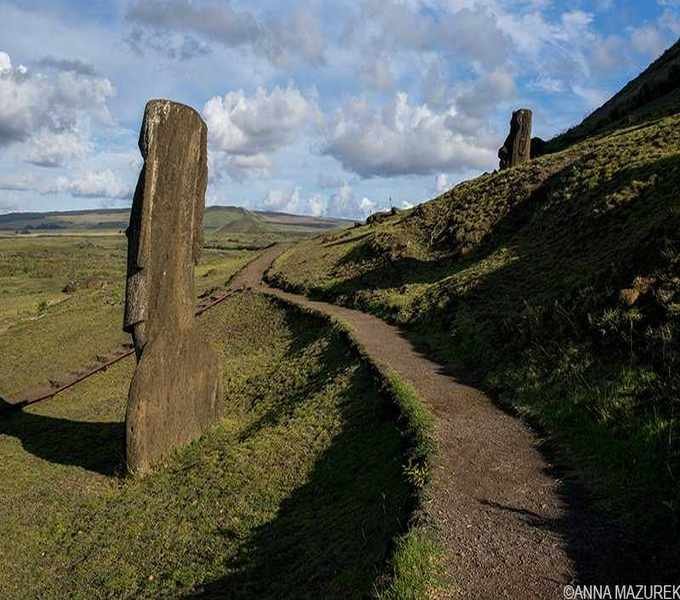
Winding trails lead through Rano Raraku, the quarry where all the statues were crafted.
Moai Statues: The Heart of Easter Island
Easter Island is renowned for its moai statues—massive carved figures made of volcanic rock, arranged on platforms called ahus. These statues symbolize the ancestors of the Rapa Nui people and once overlooked village sites. Some statues sport hats or topknots called pukao, resembling the natives' hairstyles. All standing moai have undergone restoration.
For an insightful history lesson, check out the NOVA PBS documentary on Easter Island available on PBS and YouTube.
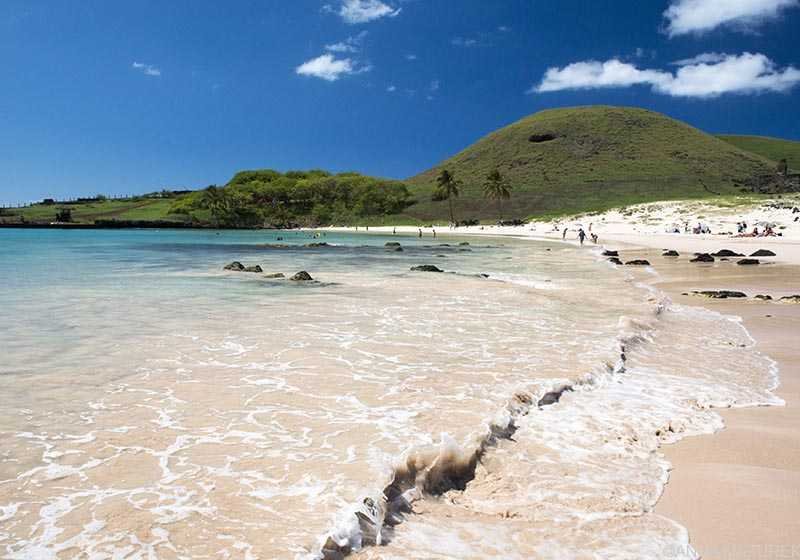
Anakana marks the location of the first settlement on Easter Island, known as Rapi Nui. It features the island's only white sand beach.
Rapa Nui National Park Access
Most sites on Easter Island fall under Rapa Nui National Park. Entry tickets are required at each major location, priced at $80 or 54,000 Chilean pesos, available at the airport. I saved $9 by paying in USD. Tickets are valid for 10 days, allowing one-time visits to Ranu Raraku and Orongo Ceremonial Village, while other sites permit multiple entries. You can pay with a credit card, but only in pesos. Drones are prohibited on the island.
Operating Hours
Rano Raraku, Orongo, Anakena, Tahai, Ahu Akivi
Monday & Wednesday: 9:30 a.m. – 8 p.m.; Other days: 9 a.m. – 8 p.m.
All other sites close at 6 p.m. but are visible from the road for photography during off hours.
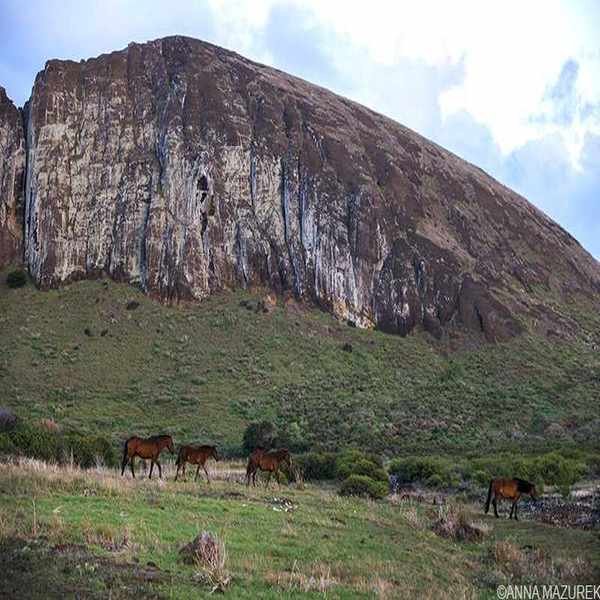
Wild horses roam near the Rano Raraku volcanic crater.
Must-See Attractions on Easter Island
Hanga Roa
This is the island's only town, bustling with accommodations, eateries, and nightlife. It houses the anthropology museum, Museo Antropológico Sebastian Englert, the perfect starting point to learn about the island's culture and history. Admission is free.
Most tourism agencies, car rentals, and grocery stores are located along Avenue Atamu Tekena. There are two banks for currency exchange and ATMs (Banco Estadio & Banco Santander). We used Santander ATMs without any issues.
A small swimming area, Playa Pea, offers a chance to cool off, though it lacks a proper beach. A few restored moai can be found around town, though they're less impressive than others scattered across the island.
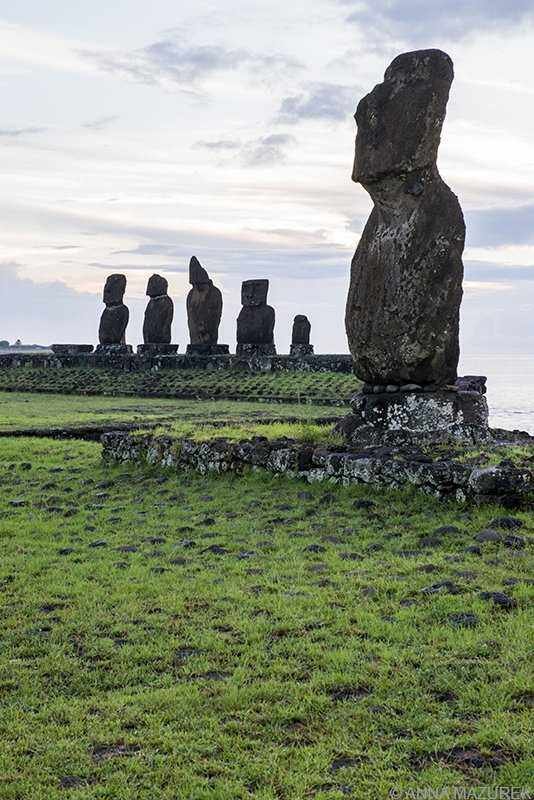
Ahu Akapu with Ahu Tahai in the background. Both sites are within walking distance from Hanga Roa.
Ahu Tahai & Ahu Akapu
Located north of Hanga Roa, Ahu Tahai features five moai. Nearby, Ahu Akapu showcases a solitary moai with eyes on the cliff. This popular sunset spot is a short walk from town.
Best photography time: Sunset for silhouettes or early morning for well-lit details.
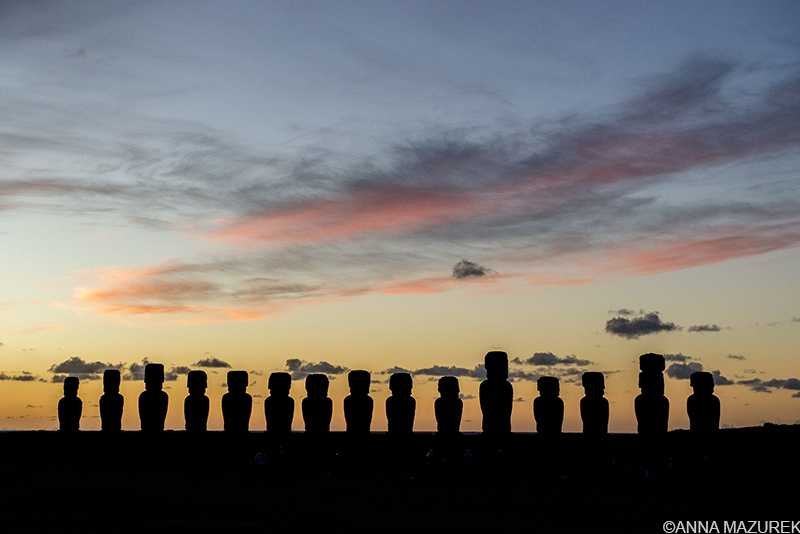
The gates at Ahu Tongariki opened just before sunrise, with about 25 people waiting. The vast site felt spacious during my March visit. Crowds may be larger during peak season (December to February).
Ahu Tongariki
The most sought-after sunrise location is Ahu Tongariki, the largest ahu on the island, featuring 15 statues. The dramatic cliffs of Peninsula Poike serve as a stunning backdrop. The sunrises directly behind the statues, creating iconic silhouette shots. The moai face away from the sea and toward the ruins of an ancient village, with petroglyphs near the far end of the site by the road. I recommend visiting in the afternoon for better detail on the statues.
Best photography time: Late afternoon or sunrise (only silhouettes).
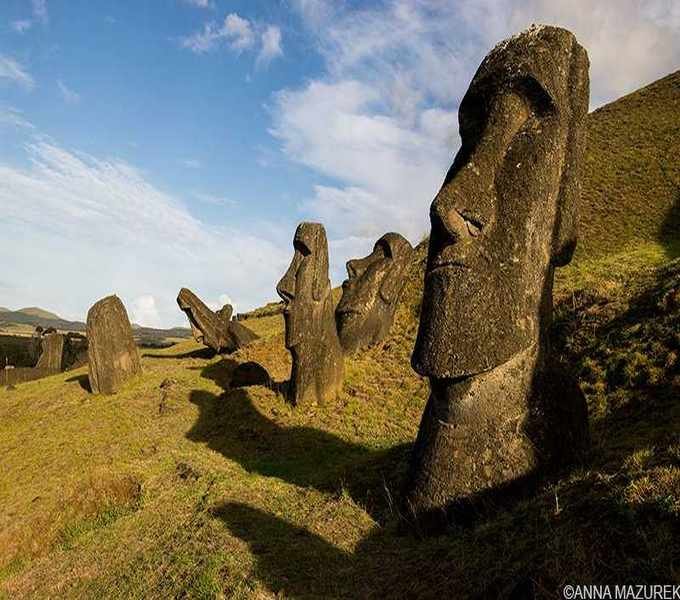
Rano Ranaku is best captured in the morning or late afternoon to highlight the statue details. This shot was taken just after the site opened.
Rano Raraku
All moai originate from the quarry at Rano Raraku, known as the “nursery.” The massive volcanic crater is dotted with moai at different construction stages, including a unique kneeling moai on the southeastern side.
Best photography time: Late afternoon or morning for optimal side lighting. Watch out for crowds to keep them out of your frame!
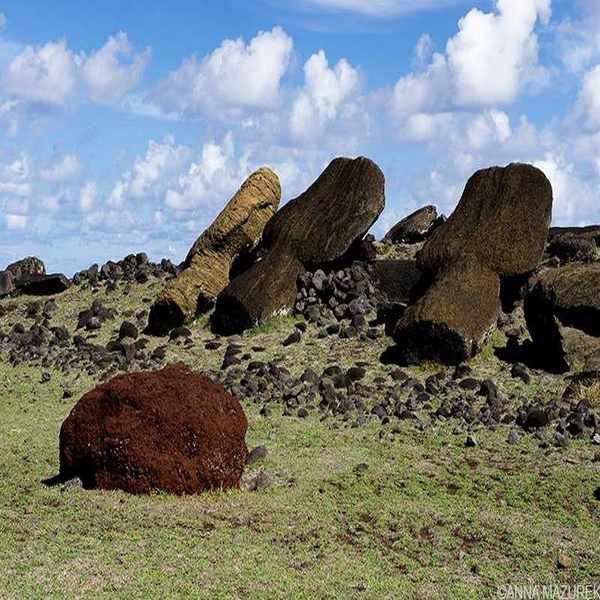
Ahu Vaihu remains unrestored, while the standing moai have been restored since the 1960s.
Ahu Vaihu & Other Southern Coast Sites
On the way to Ahu Tongariki, you'll find platforms with toppled moai. At Ahu Vinapu, one platform features mortar-less stones reminiscent of Inca ruins in Peru.
Best photography time: Late afternoon when sunlight enhances the statues.
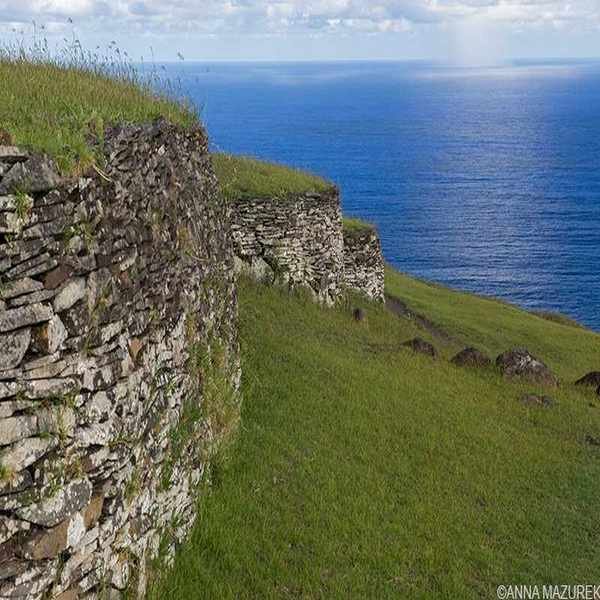
Orongo Ceremonial Village is situated atop an extinct volcano on Easter Island.
Ranu Kau & Orongo Ceremonial Village
Stunning is an understatement for Orongo Ceremonial Village. Positioned on the edge of a crater lake called Ranu Kau, it overlooks the ocean. The walls of the small houses are built with thin stone slabs, offering views of nearby islands. This village was the center of an island-wide bird cult in the 18th and 19th centuries, featuring bird petroglyphs.
Orongo is accessible by car, located 4 kilometers from town. A short hike from Hang Roa leads to a viewpoint of the crater that doesn't require a ticket.
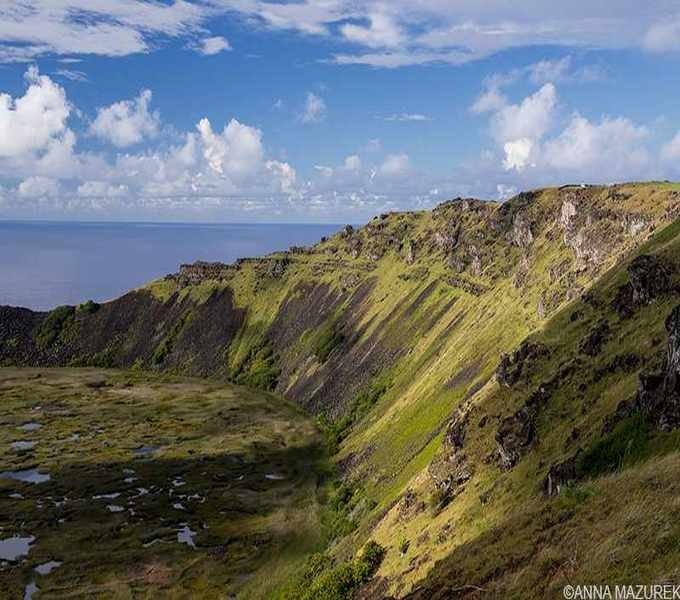
The Ranu Kau crater is best photographed when the sun is overhead. Early or late visits result in shadows along the edges.
Best photography time: Afternoon or sunset light is ideal.
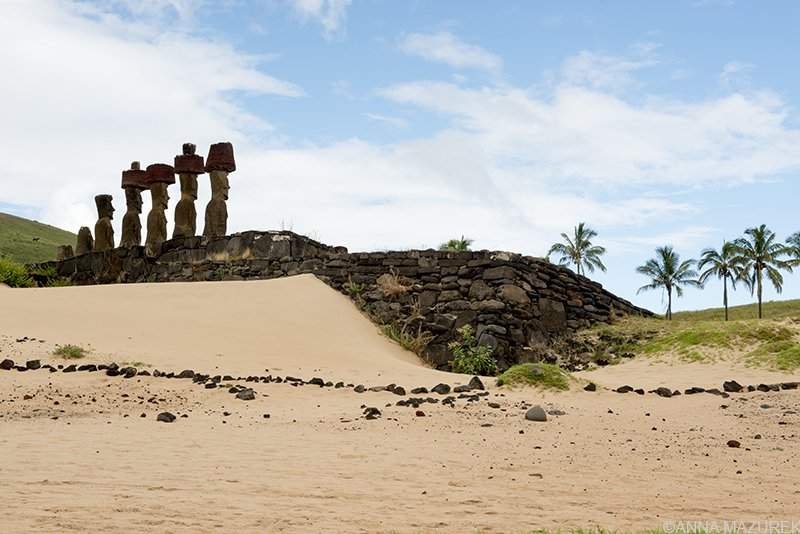
Ahu Nau Nau is the main attraction at Anakena beach, home to seven moai statues.
Anakena Beach, Easter Island
Anakena is the island's most picturesque location and the site of its first settlement. The white-sand beach is lined with palm trees, surrounding the main feature—Ahu Nau Nau, which boasts seven moai with topknots. Another lone moai, Ahu Ature Huki, is to the right. A few overpriced restaurants and bars are located on the beach's eastern side, while the clear waters provide a refreshing escape from the heat.
Best photography time: Afternoon or sunset, as the moai face away from the ocean, requiring afternoon light for clear details.
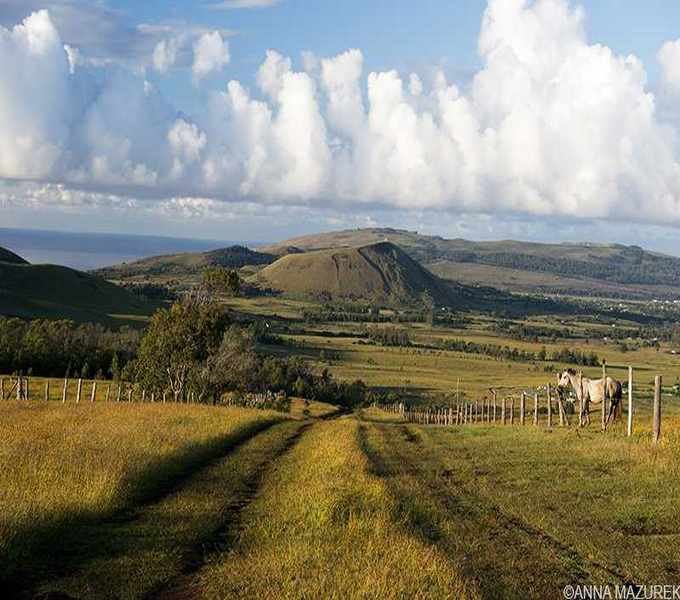
The trail to Maunga Terevaka, the island’s highest point, is beautiful and easy to follow.
Maunga Terevaka
Hiking to Maunga Terevaka's summit is the best way to appreciate the island's small size. As one of three extinct volcanoes, it stands as the highest point, offering views of the ocean from all sides. Accessible by foot or horseback, it has an easy trail. Start at sunrise for cooler temperatures and solitude. The ascent takes about an hour, with plenty of photo opportunities along the way.
Best photography time: Sunrise.
Puna Pau
This volcanic quarry is the source of the red cylinder topknots adorning the statues, known as pukao, which are thought to resemble native hairstyles. Over sixty pukaos were moved around the island, with another 25 remaining near the quarry.
Best photography time: Late afternoon or early morning for detail shots.
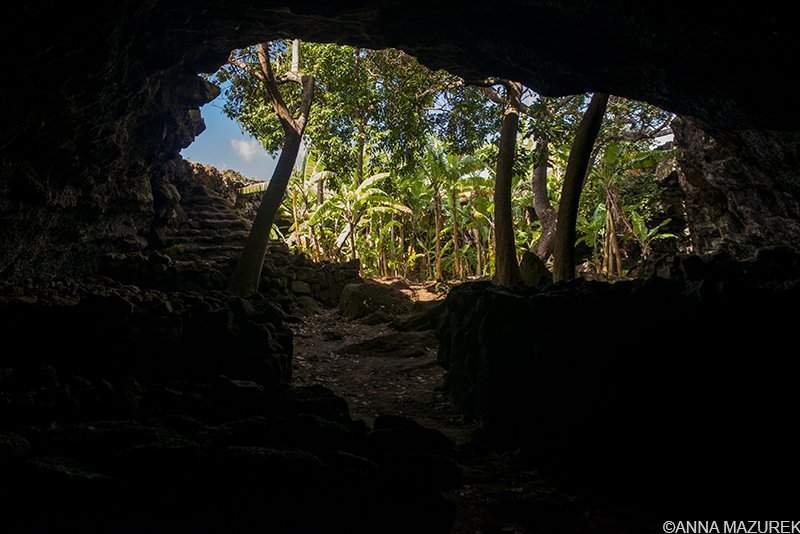
Ana Te Pahu Cave is the largest cave on the island.
Ahu Akivi & Ana Te Pahu Cave
These are the only moai facing the ocean, located inland. The seven moai on this ahu were restored in 1960, holding astrological significance, as they align with the setting sun during equinoxes. The trail to Maunga Terevaka begins at the parking lot's edge.
To the left at Ahu Akivi’s entrance, a road leads to the Ana Te Pahu Cave entrance booth. It's a 15-minute walk to the cave, which is also easily accessible from Ahu Akivi's parking lot. The largest cave on the island stretches over 7 kilometers, filled with bananas and sweet potatoes.
Best photography time: Late afternoon light brings out the statues' details. Mornings can be poor for lighting.
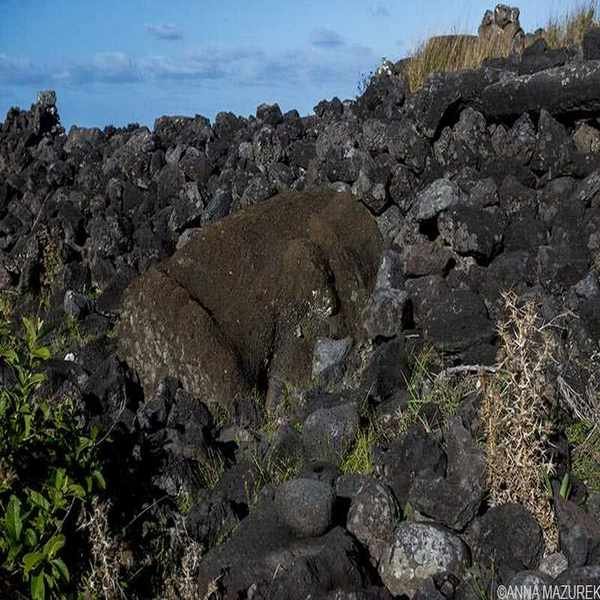
A moai statue lies on the rugged Northern Coast of Rapi Nui. This area remains unmarked and isolated.
North Coast
Exploring the Northern Coast is the best way to experience authentic Easter Island. With no roads leading here, the area features unrefurbished moai and numerous petroglyphs, stone homes, and caves. Watch for a solitary standing moai hidden among the ahus. The hike is relatively easy, taking about five to six hours, starting near Ana Te Pahu Cave and ending at Anakena.
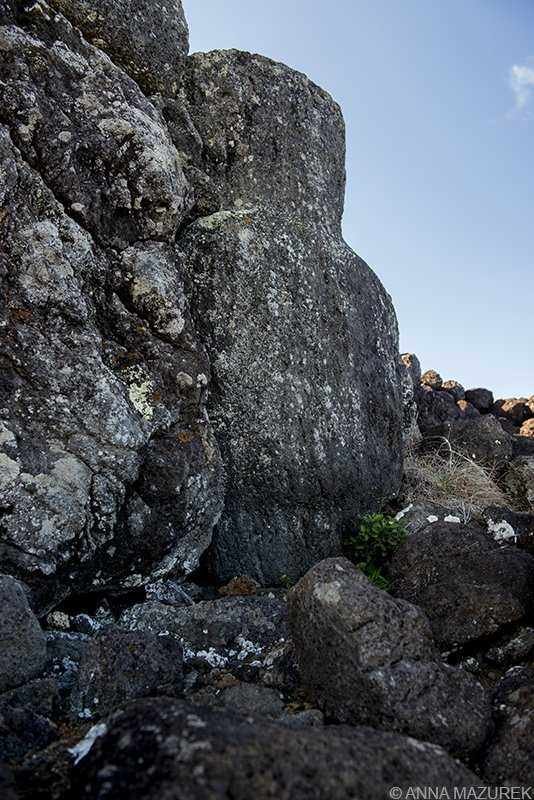
This moai statue on the Northern coast was hidden as part of the platform to prevent it from being toppled during tribal conflicts.
It's advisable to hire a guide since there are no signs or marked trails. Tour companies offer half-day hikes for around $200 per person. Alternatively, find a local guide for a more affordable rate—ours cost $80 per person.
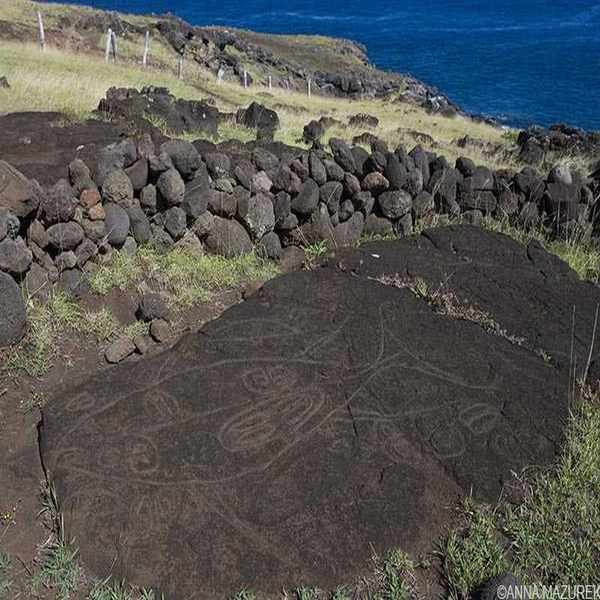
Petroglyphs are scattered across the island, with the best examples found along the untouched northern coast.
Papa Vaka Petroglyphs
These petroglyphs are located between Anakena and Ahu Tongariki. While they are the easiest to access, they aren’t as impressive as those on the remote Northern coast.
This list isn’t exhaustive as we missed a few sites due to weather, but these are the top spots for photography.
Easter Island Travel Essentials
Costs, Transportation & Accommodation
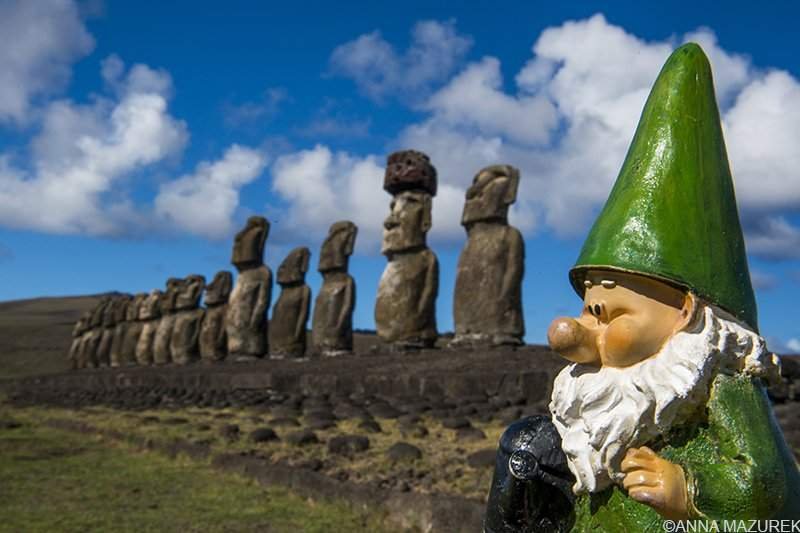
Alfred the gnome thinks this photo at Ahu Tongariki is one of his best travel captures.
Optimal Time to Visit Easter Island
Year-round is good, except for April, which sees the most rainfall. Summer (December to February) is peak season, particularly during the Tapati Rapi Nui Festival in February. Temperatures typically range from the low 80s F, rarely dropping below 60 in winter. The driest months are October through February. I visited in late March to avoid crowds and enjoy ideal weather; though it rained briefly, it didn’t last long.
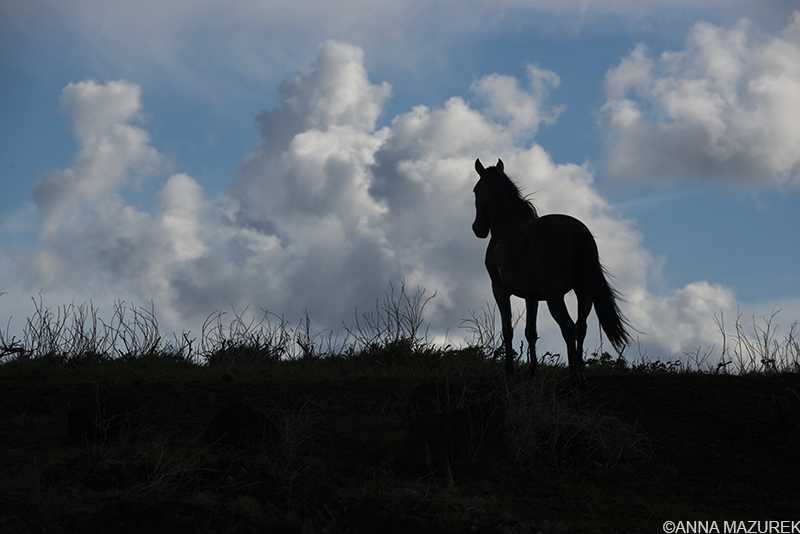
Wild horses were a delightful surprise on Easter Island. Many roam freely, often crossing roads, so drive cautiously.
Estimated Costs for a Seven-Day Trip to Easter Island
Groceries: 49.18
Beer: $5.41
Gas: $22.16
Rental Car for 3 Days: $173.35
National Park Ticket: $80
North Coast Hike: $82.08
Accommodation: $123.89
Total Cost: $553.23
Note: This excludes my roundtrip flight cost of $887 from Santiago, which I booked using miles from my Chase Sapphire Card, currently one of the best rewards cards. Flights range from $400 to $1200 roundtrip, and I secured mine six months ahead.
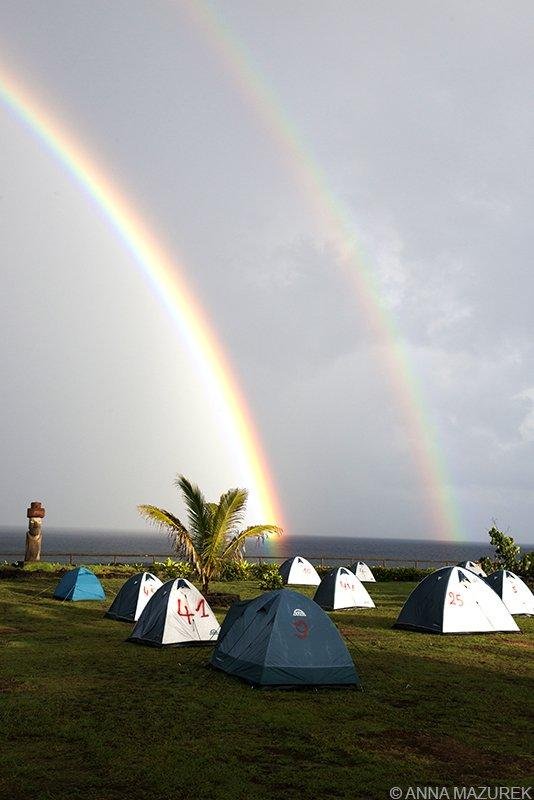
After a heavy rainstorm, stunning double rainbows appeared at Camping Mihinoa, where we stayed. While we opted for a room, many guests camped.
Budget Tips for Easter Island
- Book flights 6-9 months ahead. Prices can drop to $400 roundtrip from Santiago if booked early! LATAM is the only airline serving Easter Island with eight flights weekly and one Monday night flight continuing to Tahiti.
- Consider camping or budget lodging. My friend and I stayed at Camping Mihinoa, renting a private room for $40 USD/night—$20 each, comparable to hostel prices on the mainland. They also offer dorms and tents for around $15 per person, and the place is clean with a great location.
- Trip Length. Four to five days is enough to explore the island. We stayed six nights due to cheaper flight options.
- Cook your meals. Food is pricey due to the island's remoteness. We cooked most meals, only dining out once, where fish and chips cost $30 USD! Beer was $6 at the grocery store.
- Bring food from home. I saw travelers checking bags of food on the flight, as grocery store options are limited.
- Carry USD. Sometimes, it's cheaper to pay with USD; for example, I saved $9 on my park entry fee by paying in USD.
- Check exchange rates. Many prices are listed in both USD and Chilean Pesos, so use a currency app to find the best deals. I saved $54 on my six-night accommodation by paying in pesos.
- Rent a car. If you can drive manual, it’s cheaper to explore the island independently. Rental rates are $60/day for manual and $100 for automatic, while group tours start at $120 USD/person. Gas is pricey, but the freedom to explore is worth it.
- Expect slow Wi-Fi. Accept that you're in the middle of the Pacific—Wi-Fi is notoriously slow.