Essential Guide to Hiking Havasu Falls: Tips and Photos
Last October, I enjoyed a meal in Santa Fe with three friends, indulging in sopapillas. By the end of our lunch, we had concocted a plan for an incredible hiking trip. What began as a lighthearted idea soon transformed into a goal.
We aimed to hike to Havasu Falls, a breathtaking blue-green waterfall nestled within the Grand Canyon on the Havasupai Indian Reservation in Arizona. We settled on a date, and my friends promptly requested time off work right there at the table—May 2018. Our only hurdle was securing a permit.
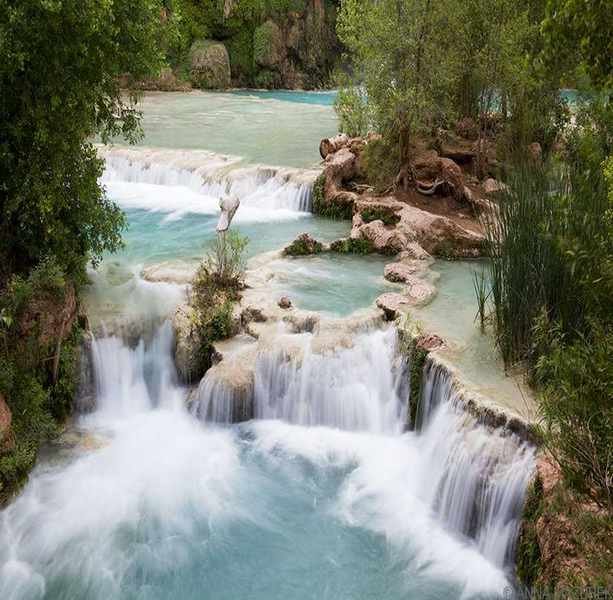
A long exposure of the small rapids at the foot of Havasu Falls at sunrise.
Securing a Permit for Havasu Falls Hike
Obtaining a campground permit for Havasu Falls is the most challenging aspect, as they typically sell out in under three hours each year. The campground can only host 300 visitors, and day hikes are prohibited. Permits are available starting February 1st MST annually, which can be reserved by phone (928-448-2121) or online at havasupaireservations.com.
Three members of my group attempted to call the moment permits became available, but all we got was a busy signal. Since I was in South America, I couldn't call. We all struggled to access the website initially. Switching to Chrome helped me secure a permit a few minutes after they released. We had to adjust our hike by a day due to unavailability on our first choice.
Before permits go on sale, have a list of preferred dates with backups. It's crucial to communicate with your hiking companions on the release day. The person who secures the permits must pay for the entire group and include two names on the reservation—one person must present their ID at the office. Avoid including flaky friends on the reservation.
Accommodation Costs for Havasu Falls
[These are 2018 prices; 2019 rates are not yet disclosed.]
One Person, 2 Days / 1 Night: $140.56
One Person, 3 Days / 2 Nights: $171.12
One Person, 4 Days / 3 Nights: $201.67
Weekend nights (Friday through Sunday) and holiday weekdays, including Spring Break, incur an additional fee of $18.34/night.
Havasupai Lodge
If camping isn't appealing to you, consider the Havasupai Lodge. However, these reservations are even more difficult to secure than campground spots. Lodge bookings open on June 1st each year for the following year. Many who stayed there expressed that it wasn't worth the $145/night plus a $40 permit fee since it's about an hour's hike from Havasu Falls.
For more details, visit theofficialhavasupaitribe.com or call 928-448-2121. The office operates from 9 a.m. to 3 p.m. MST on weekdays. Getting through on the phone can be tough, but calling early increases your chances.
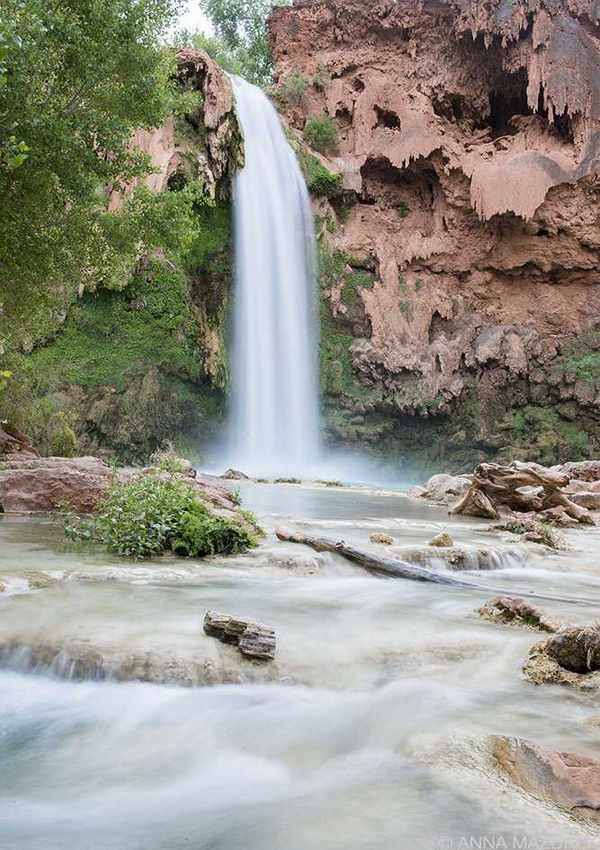
A long exposure of Havasu Falls
Best Time to Visit Havasu Falls
My friends and I hiked in May, which I highly recommend. Weather conditions were pleasant, with warm days and cool nights. Though the water was brisk, it was still enjoyable for swimming. The monsoon season runs from June to September 30th, which can lead to dangerous flooding. Temperatures can exceed 100°F in summer.
Winter visits are chilly for swimming, as campgrounds close during December and January. Peak hiking season lasts from March through October. Avoid hiking during peak sun hours; I suggest starting your trek at sunrise. We began hiking at 6 a.m. and headed back around 3 a.m.
Getting to Havasu Falls
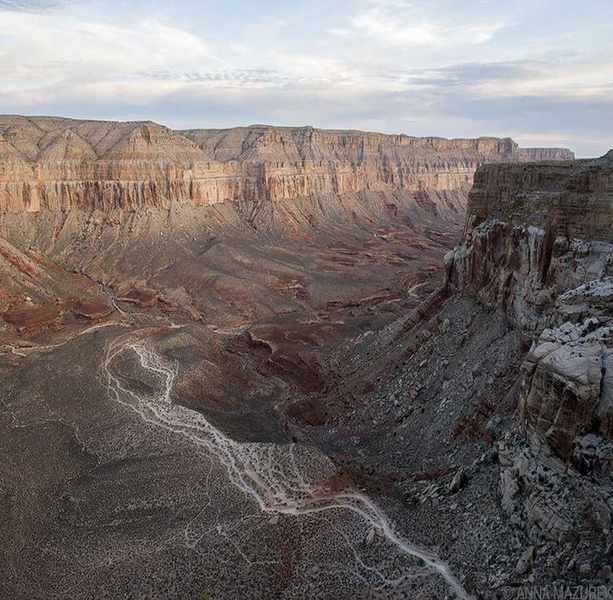
The view from Hualapai Hilltop, the starting point for the Havasu Falls trek in Arizona, reveals a series of well-worn hiking trails. The trail begins with a steep series of switchbacks before flattening out in Hualapai Canyon.
Hualapai Hilltop Trailhead
The trailhead is situated 68 miles from Route 66 near the small community of Peach Springs, Arizona. The drive from Peach Springs to the trailhead takes around an hour. We stayed at Hualapai Lodge the night before our hike, the only hotel in Peach Springs, costing about $150/night, which we split among four.
Waking up at 2:30 a.m., we packed up and headed to the trailhead. The little parking lot was already full, with cars lining the road! By the time we parked and organized ourselves, it was nearly 6 a.m. The sun emerged over the canyon rim by 7:30 a.m.
The trail descends roughly 1,500 feet in the first 1.5 miles through switchbacks. We reached the base of the switchbacks within 45 minutes, taking numerous photos along the way. The remainder of the trail is mostly flat with a slight decline.
After the switchbacks, you enter Hualapai Canyon, which can be brutal during summer heat and poses dangers during monsoon season due to flash floods. Always check the weather and plan properly. Start your hike before sunrise to escape the daytime heat.
Overall, the path is straightforward, with one main well-marked trail and a few branching paths that connect back. You'll encounter fellow hikers, making it rare to get lost unless you overlook the sign below.
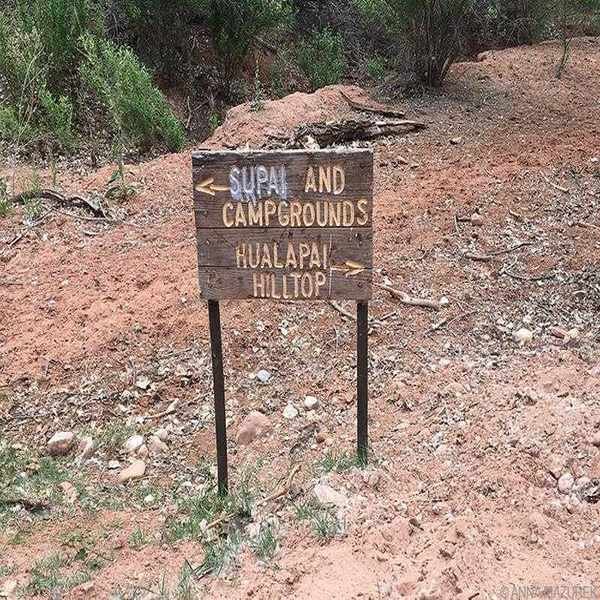
The crucial sign where Havasu Canyon meets Hualapai Canyon.
Key to the trail is to turn left when you see the wooden sign pictured above, where Hualapai Canyon meets Havasu Canyon. After turning left, follow the creek and cross a bridge to enter the village. It took us 20 minutes from the sign to the village.
Supai Village (Mile 8)
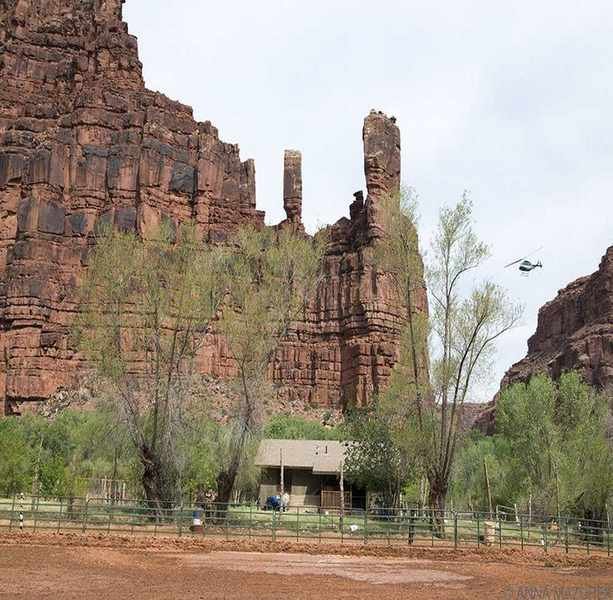
A helicopter departs Supai Village during the Havasu Falls trek in Arizona. Helicopter services operate four days a week from 10 a.m. to 1 p.m. from March to October.
Upon reaching the village at mile eight, we spent about an hour exploring and picked up our permits from the tourist office—a green building on the left that's hard to miss. Bringing a printed permit is wise. Make sure to collect the maps and additional helpful information they provide. The village was surprisingly large for its remoteness, featuring a helicopter landing pad for those opting out of hiking.
From the office, the campground is about an hour away (two miles). The route is clearly marked through town, following the main road and turning left at the church.
Navajo Falls & Fifty Foot Falls (Mile 8-9)
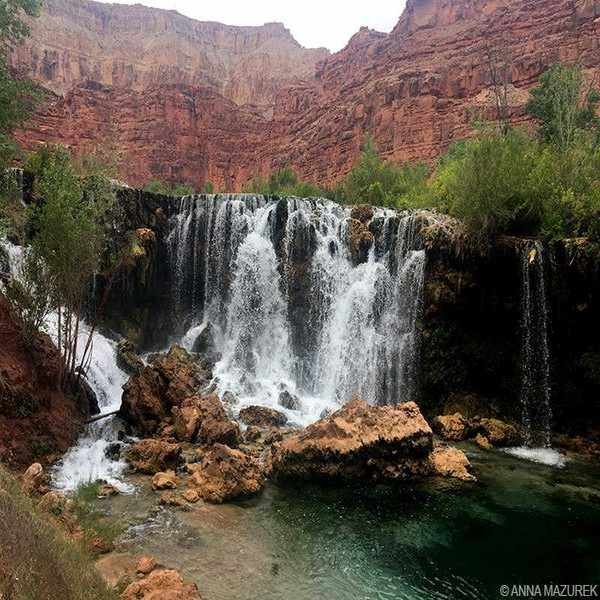
Navajo Falls can be found just outside Supai Village.
The first waterfall after the village is Navajo Falls, slightly off the main trail and easy to overlook. It's nice but less dramatic than the others in the area and located 300 yards from Fifty Foot Falls. Refer to the maps provided at the tourist office.
Havasu Falls (Mile 10)
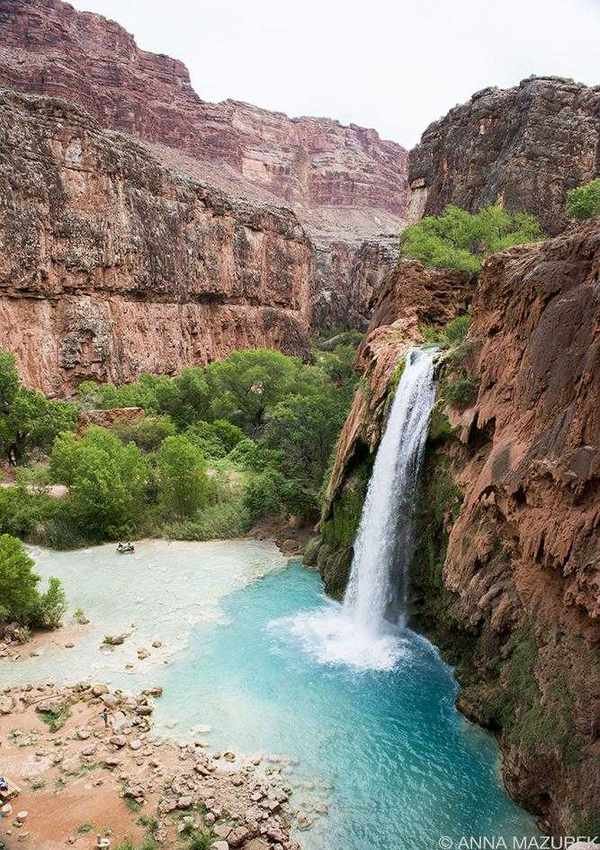
The initial view hikers have of Havasu Falls is from the trail above.
The highlight of the hike is Havasu Falls, just two miles from the village. You can't miss it, as the trail runs right alongside. There's a steep side trail to reach the base. It's best to take photos from the top, drop your backpack at the campground, and return for shots at the foot of the falls.
All waterfalls in the area are part of Havasu Creek, fed by a natural spring. The turquoise color arises from minerals absorbed over thousands of years from the limestone, reflecting sunlight.
Campground
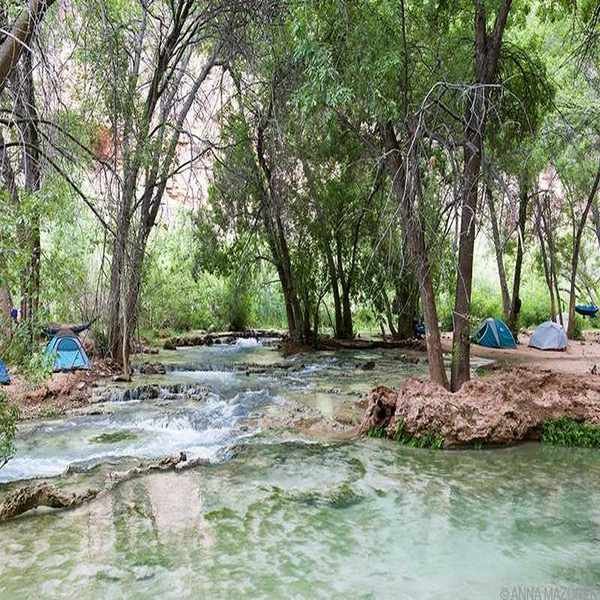
The expansive campground stretches across both sides of the creek.
The campground is surprisingly spacious, featuring ample trees for hammocks and scattered picnic tables. We chose a quiet spot by two picnic tables near the bathrooms, providing easy access to the falls for photography. The spring for drinking water is conveniently located near the front of the campground. The hike to the campground took us five hours, while the return trip was under four hours, as we paused to take many photos on our way in and spent an hour in the village.
Mooney Falls
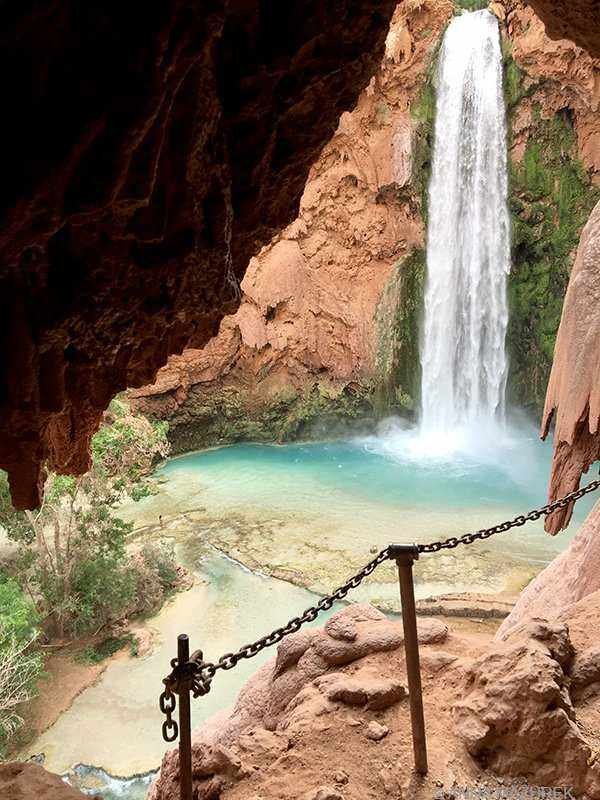
Descending to the base of Mooney Falls is an exhilarating experience involving ladders, ropes, and chains.
Mooney Falls is the tallest waterfall in the park, situated at the far end of the campground. The descent to the base is not for the faint-hearted, featuring a 200-foot drop through a cave followed by ladders and chains soaked by the mist. This treacherous climb often involves two-way traffic, so keep your hands free and pack light. Hiking boots are essential—no flip-flops or sandals. For a visual of the descent, check out my Instagram story showing the process.
Beaver Falls
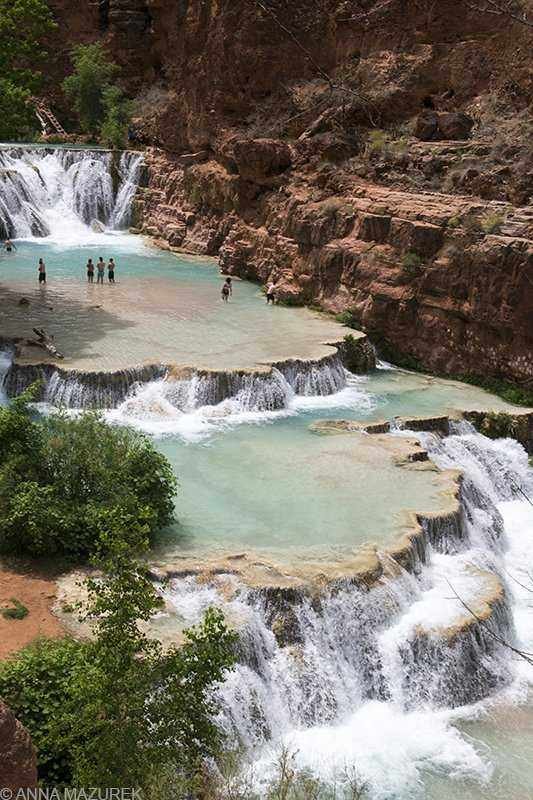
Aerial view of Beaver Falls, located two miles from the base of Mooney Falls.
Beaver Falls, the most secluded waterfall, lies three miles from Mooney Falls. To reach it, you must first descend to the base of Mooney Falls. Although this trail can be tricky, it's generally easy to navigate. You'll need to cross the river three times, so wearing water shoes or being prepared to remove your boots is advisable. The trails may diverge at crossings, but they eventually reconnect. The canyon walls also prevent you from getting too lost.
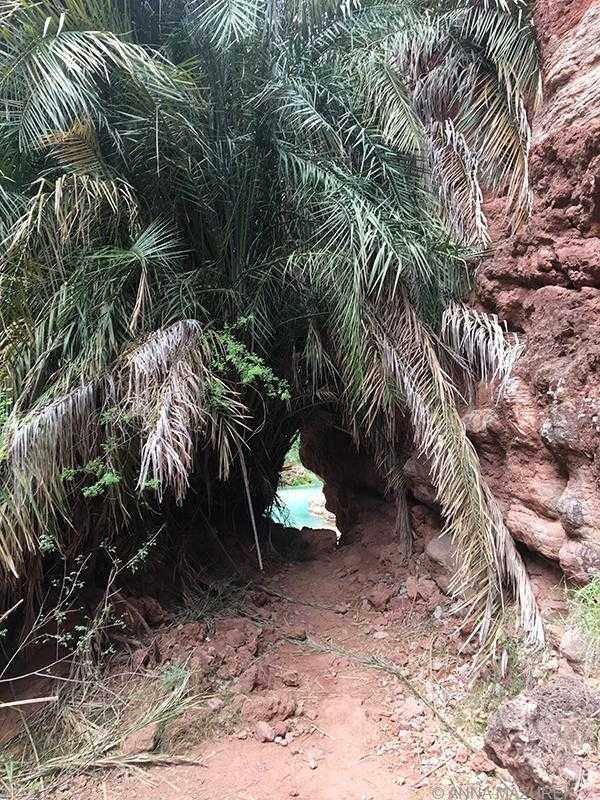
A distinctive palm tree marks the route to Beaver Falls, with a ladder leading to an overlook.
Once you spot the palm tree, a small cave with a ladder on the right leads to an overlook of the falls. You can access the base by wading through water and climbing over rocks, but expect to get wet. If you have non-waterproof camera gear, take the left trail by the palm tree to reach the top without getting soaked.
Beaver Falls is impressive, and you'll pass a smaller waterfall on the way—keep going until you reach the palm tree! It took us two hours to return from Beaver Falls to the base of Mooney Falls. The route is mostly exposed, so start early to avoid the intense sun!
Havasu Falls Hiking Tips
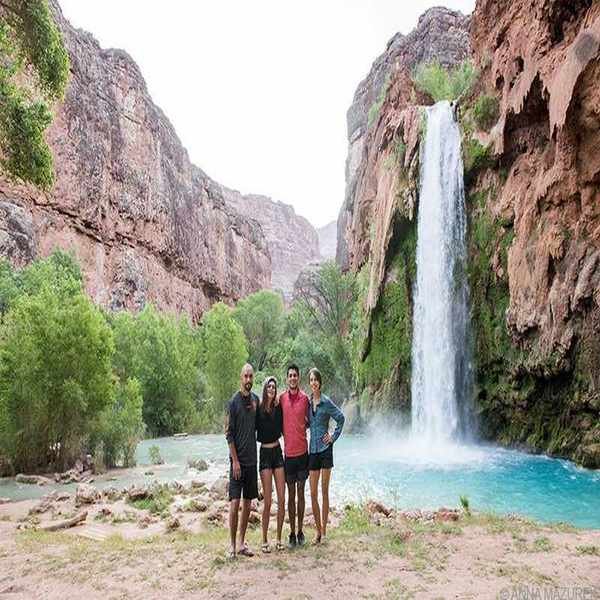
Our hiking group (left to right): Sean, Bear, Rolando, and myself. I'd hike anywhere with these guys!
- Plan for at least two nights to fully enjoy the waterfalls.
- Drones are prohibited on the reservation.
- Bring a printed copy of your permit.
- Pack out your trash. Many visitors leave behind inflatable pool floats, which is not acceptable!
- Cell phone reception is mostly unavailable, with limited service in town. The village does offer Wi-Fi.
- Be cautious of mules on the trail.
- We encountered no bugs or mosquitoes in May.
Is the hike difficult?
Not at all! The total distance from the trailhead to Havasu Falls and the campground is 10 miles, with an additional two miles to Beaver Falls, which you can do with just a day pack. The hike to the falls is downhill, while the return is uphill. The final switchbacks are steep, but pacing yourself ensures success. Weather can be tricky; start early to avoid the heat as much of the trail lacks shade.
Food & Water
There's a natural spring in the campground with safe drinking water. For extra precaution, bring a Sawyer MINI water filter. Supai Village has a café and stalls selling fry bread, but it's best to pack your own food. Refer to the packing list below for recommendations.
Restrooms at Havasu
The compost toilets were surprisingly pleasant—clean and odor-free. Toilet paper is provided! While there's no running water, hand sanitizer machines are available in the restrooms near the campground.
Pack Mules & Helicopters
If hiking isn't your preference, a helicopter ride costs $85 each way to Supai Village, followed by a two-mile hike to Havasu Falls. You can also hire a mule for $242 round trip to transport yourself and/or your luggage. Reservations must be made at least one day in advance.
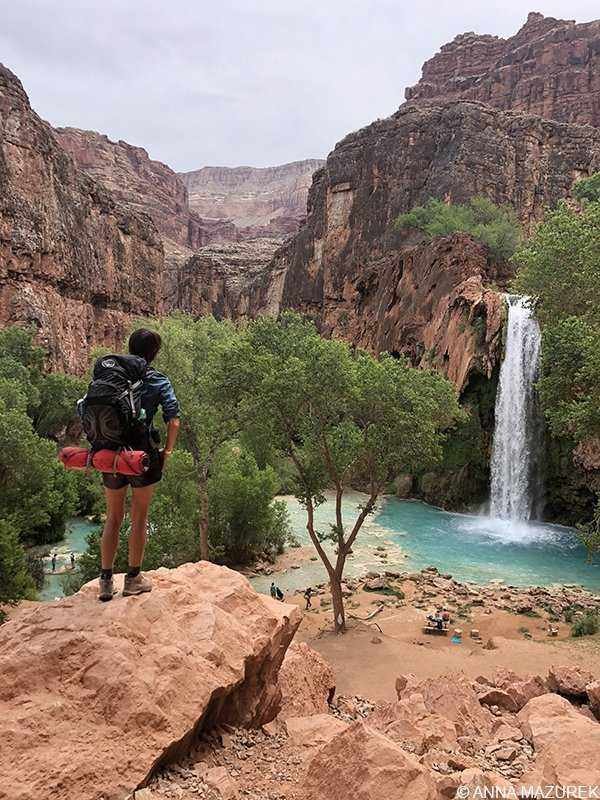
My backpack weighed about 20 pounds, including my DSLR camera and a 7-pound wide-angle lens.
Summer Packing List for Havasu Falls Hike (Three Days & Two Nights)*
(As a minimalist packer for multi-day hikes, I carry a DSLR camera that weighs seven pounds. I usually wear the same outfit daily. Quality gear will keep you fresh and dry.)

Breakfast of champions: tortillas and honey peanut butter squeeze packs.
Food Recommendations:
For more photos from Havasu Falls, connect with me on Instagram!
____________________________________________________
*Some Amazon and REI affiliate links are included above. If you click on a link and make any purchase, I earn a small commission at no extra cost to you. I appreciate your support and am happy to answer any questions via email.