Dyson PencilWash: A Lightweight Floor Cleaner That Lacks Deep Cleaning Power
The Dyson PencilWash is a chic and lightweight vacuum-mop designed for effortless maneuvering around your home. However, its delicate construction leads to mediocre cleaning capabilities, making it only suitable for light daily maintenance rather than heavy-duty tasks.
Pros and Cons
- +
Extremely easy to handle, feels very natural to use
- +
Easily navigates around corners and tight spots
- +
Lightweight design
- +
Attractive appearance
- -
Small water tanks
- -
No self-cleaning features, leading to odor and bacteria build-up
- -
Only adequate for light cleaning
- -
Lacks dirt detection capabilities
- -
Can be messy to empty
- -
A traditional mop is still necessary
This device is excellent for light clean-ups but won't replace your regular vacuum or mop. If you want a more capable vacuum-mop, consider options from other brands that performed better in our tests.
Quick Overview
The Dyson PencilWash is an agile floor cleaner that feels almost like an extension of your arm. Its sleek design will complement modern kitchens and laundry areas. Nonetheless, it struggles with tough stains and larger debris, requiring multiple passes for effective cleaning.
You'll still need a vacuum for heavier cleaning tasks. For similar pricing, consider the Dreame H14 Pro or the Tineco Floor One Stretch S6, both of which clean more thoroughly and offer easier maintenance.
Specifications
Type | Vacuum-mop / wet floor cleaner |
Runtime | Up to 30 minutes |
Charge time | Up to 4 hours |
Clean water tank | 10.14 fluid ounces |
Dirty water tank | 11.5 fluid ounces |
Self-cleaning? | No, only scrapes debris |
Self-drying? | No |
Dirt detection? | No |
Cleaning modes | 2 (Normal and MAX) |
Weight | 4.85 pounds |
Design and Features
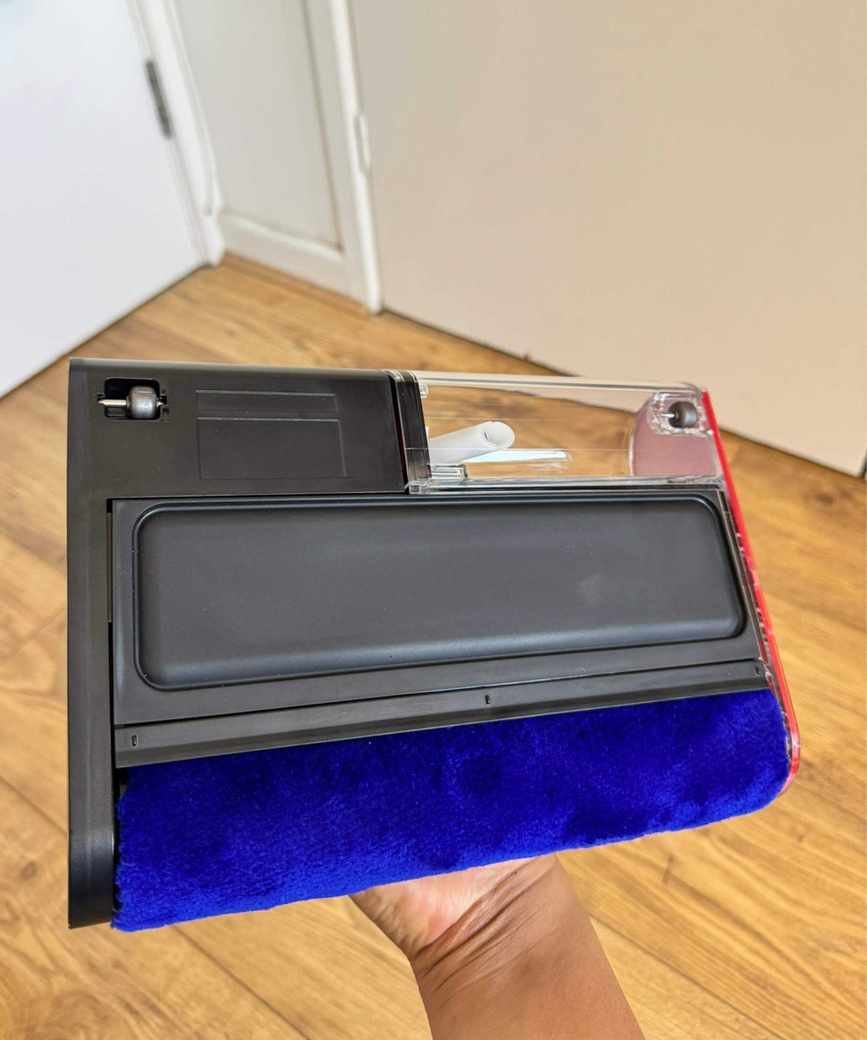
The Dyson PencilWash refreshes the roller using only water, with eight hydration points to keep it clean while scraping away dirt.
This model sports a stylish, metallic design with a bronzed wand that fits well in modern kitchen environments. While it shares design elements with other Dyson products, its unique appearance helps it stand out.
Equipped with multiple suction modes, it offers just two settings: Normal and MAX. Since it lacks dirt detection, it won't adjust cleaning strength based on floor conditions.
For stubborn stains, engage the MAX feature for extra moisture during cleaning. The device works best with just water, but you can use the Dyson 02 Probiotic Hard Floor Cleaning Solution for enhanced results.
With a compact design, the PencilWash separates clean and dirty water efficiently, eliminating the need for filters and reducing potential wear-and-tear issues. However, its tanks are smaller than competitors, with only 10.1 fl. oz. for clean water and 11.5 fl. oz. for dirty water.
Usage Experience
The Dyson PencilWash excels in maneuverability, providing a smooth cleaning experience. Its lightweight nature allows it to swiftly tackle light messes on various floor types.
However, during testing, I found it often fell short of delivering a thorough clean. On the normal setting, the roller sometimes missed spots, leaving a sticky residue behind.
While the device may improve with the Dyson 02 Probiotic Hard Floor Cleaner, its suction power doesn't effectively pick up larger debris, often leaving items like crumbs behind.
At $350, this isn't the most economical choice for a sole floor cleaner. If you're prepared to use it alongside your regular vacuum and mop for best results, it can still be a valuable addition to your cleaning arsenal.
Cleaning Tests
Testing the PencilWash involved a range of messes, including ketchup, mustard, and raw egg, among others. In normal mode, it struggled with residue, and even on MAX mode, results were disappointing.
While it cleared most mustard stains after several passes, it often left behind watery residue, indicating design flaws in the dirty tank.
The same issues arose with ketchup and pasta sauce, requiring multiple attempts to fully clean. Unfortunately, it failed to handle egg debris and cereal crumbs, necessitating manual cleaning of the floorhead.
In summary, while the PencilWash can handle light spills faster than a mop, larger debris requires manual intervention.
Setup and Maintenance
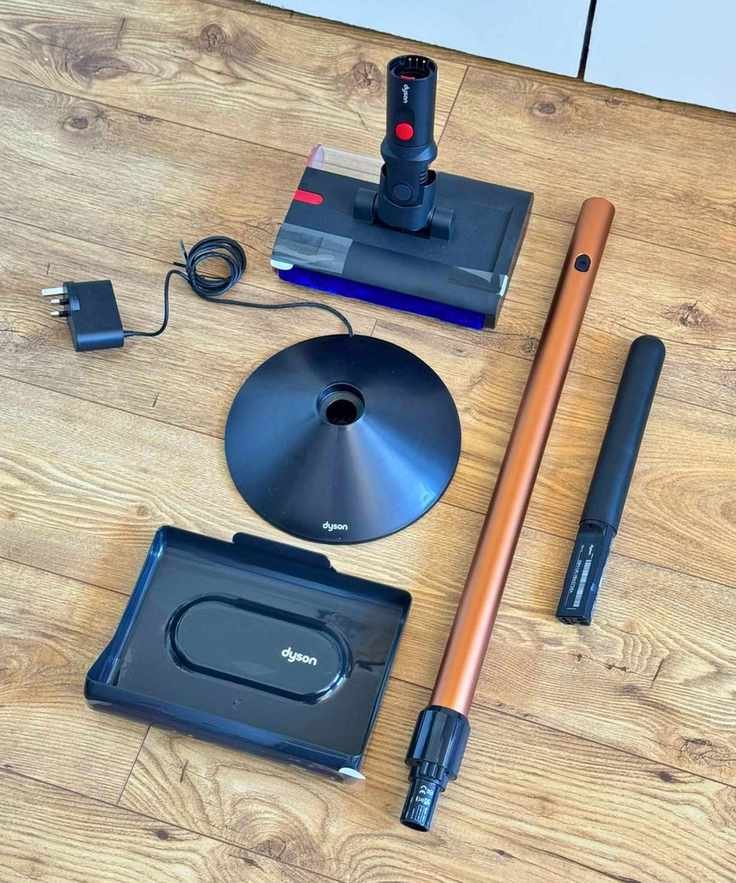
The Dyson PencilWash comes with a separate tray for the floorhead, as the charging base only holds the handle.
Setting up the PencilWash is straightforward: attach the handle, place it in the charging dock, and allow it to charge for about two hours.
The charging dock does not clean or dry the roller, so you'll need to use a separate drip tray for the floorhead, which can lead to odors and bacteria growth.
It's recommended to rinse the roller after each use, but this can be a messy task since the dirty water tank is integrated into the floorhead.
Cleaning it thoroughly after every use can help, but it's a cumbersome process compared to other models that offer a more streamlined cleaning experience.
Comparing the Dyson PencilWash
The Dyson PencilWash retails for $349.99, which is cheaper than many flagship models but still pricey given its performance limitations.
In contrast, the Dreame H14 Pro is often available for around $350 to $450, and it offers significantly better cleaning capabilities.
The Tineco Floor One Stretch S6, priced at $349, also outperforms the PencilWash in both efficiency and ease of use.
For additional tips on vacuum shopping, explore insights from our extensive product testing.